
Why Owners and Hiring Managers Should Have an Informative LinkedIn Profile
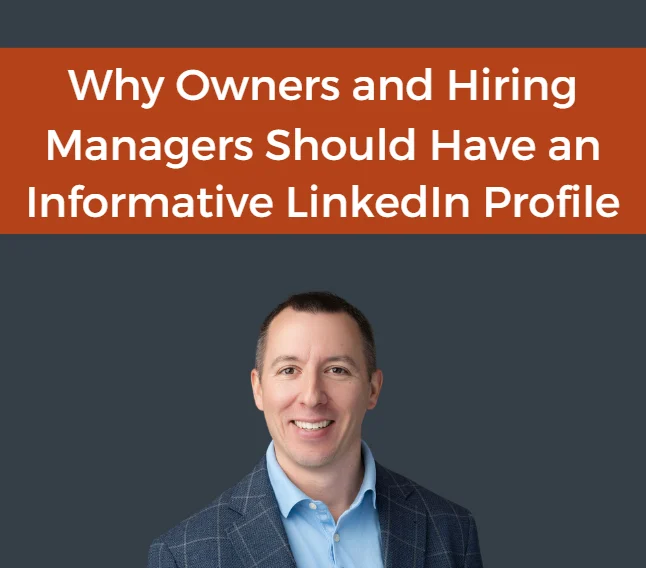
Written by: Andrew Henke, Sr. Managing Partner at BRIX Recruiting Partners
In today’s hiring market, candidates are doing more homework than ever before.
Before they apply to a position, before they take a recruiter’s call, and definitely before they meet with an owner, president, hiring manager, or executive leader, they are researching. They are looking at the company website. They are checking reviews. They are searching Google. And in many cases, they are going directly to LinkedIn to see who is actually behind the company.
That is where a lot of companies are missing a simple but powerful opportunity.
Your LinkedIn profile is no longer just an online resume. For owners and hiring managers, it has become part of your company’s recruiting presence. It is one more place where a prospective candidate can get a feel for who you are, what your company values, what type of people work there, and whether the opportunity is worth exploring.
At BRIX Recruiting Partners, we reach out to passive candidates every day. Many of these individuals are not actively looking for a new job. They are employed, successful, and in many cases performing well at a competitor. When we contact them about an opportunity, one of the first things they often do is research the company and the people involved in the interview process.
That means your LinkedIn profile may be one of the first impressions a candidate has of you as a leader.
If your profile has no photo, very little information, an outdated title, no company activity, and no clear indication of your role within the organization, it can create doubt. It may not eliminate a candidate from considering the opportunity, but it certainly does not help build confidence or intrigue.
On the other hand, an informative and active LinkedIn profile can support the hiring process before a conversation even happens.
Candidates Want to Know Who They Are Meeting
When a candidate agrees to speak with a company leader, they are not just evaluating the job description. They are evaluating the person they may work for, the leadership team they may be joining, and the long-term stability and direction of the company.
This is especially true when recruiting passive talent.
A strong candidate may ask themselves:
-
Who is this person I am meeting with?
-
How long have they been with the company?
-
What is their background?
-
What role do they play in the organization?
-
Does this company seem professional?
-
Do people appear to grow here?
-
Is there momentum?
-
Does this look like a place I could see myself working?
Much of this information may be available on a company website, but LinkedIn gives candidates a different perspective. It allows them to see the people behind the brand. It helps them understand career paths, tenure, promotions, leadership style, company updates, employee engagement, and the human side of the business.
A company website is often polished and formal. LinkedIn can feel more current, more personal, and more authentic.
A Profile Photo Matters
This may sound basic, but it matters.
Owners, executives, and hiring managers should have a professional profile photo. It does not need to be overly formal or expensive. It just needs to be clear, current, and professional.
When a candidate is about to meet with someone, seeing a face helps create familiarity. It makes the interaction feel more personal. It also communicates that you are present, active, and approachable.
A blank profile photo can have the opposite effect. It can make the profile feel inactive, outdated, or incomplete. In recruiting, small details can affect perception. If a candidate is already hesitant about taking a call or considering a change, an incomplete leadership profile does not help move them forward.
Your photo should be simple:
-
Use a clear headshot.
-
Dress in a way that fits your industry and role.
-
Avoid group photos or cropped personal pictures.
-
Use a background that is clean and not distracting.
-
Make sure the picture looks like you today.
This is not about vanity. It is about credibility and approachability.
Explain Your Role Within the Organization
Candidates want context.
If you are the owner, president, CEO, general manager, VP of sales, operations leader, or hiring manager, your LinkedIn profile should explain what you actually do within the company.
A title alone is not always enough.
For example, “President” tells a candidate your level, but it does not tell them what you are focused on. Are you leading growth? Building a sales team? Expanding into new markets? Improving operations? Developing future leaders? Driving culture? Scaling a family-owned business into a larger platform?
These details matter.
A strong profile should include a short summary that explains your role, the type of company you are helping build, and what matters to you as a leader. It does not have to be long. A few clear paragraphs can go a long way.
For example, an owner or hiring manager could include information such as:
-
What the company does.
-
What markets or customers the company serves.
-
What type of team they are building.
-
What values matter most to the organization.
-
What growth the company has experienced.
-
What opportunities exist for employees.
-
Why someone would want to build a career there.
This gives candidates a better understanding of the person they may be speaking with and the company they may be joining.
Keep Your Career History Updated
One of the advantages of LinkedIn is that it gives candidates visibility into career progression.
If a hiring manager started as a sales rep and grew into a sales leadership role, that tells a story. If an operations leader has been promoted multiple times, that tells a story. If an owner has spent 20 years building the company, that tells a story.
Candidates notice these things.
They may look at how long leaders have been with the company. They may look at whether people have grown internally. They may look at what backgrounds employees had before joining. This helps them picture whether the company could be a fit for their own career path.
That is why keeping your profile updated matters.
Promotions, title changes, expanded responsibilities, acquisitions, new locations, leadership changes, and company milestones should be reflected. If your profile still shows an outdated title from several years ago, it can create confusion. If your company has grown significantly but your profile does not reflect that growth, you are missing an opportunity to tell that story.
Recruiting is about trust. Current information helps build trust.
Post About the Company
You do not need to become a full-time content creator to have an effective LinkedIn presence.
But if you are an owner or hiring manager, occasionally posting about the company can help candidates understand what is happening inside the organization.
This can include:
-
Company growth.
-
New locations.
-
Employee promotions.
-
Team accomplishments.
-
Training events.
-
Community involvement.
-
Awards or recognition.
-
Project highlights.
-
Customer wins.
-
Culture events.
-
Leadership lessons.
-
Industry insights.
-
Behind-the-scenes moments.
These posts help prospective candidates see momentum. They show that the company is active, growing, investing in people, and proud of the work being done.
For many candidates, this matters.
A job description can explain responsibilities and compensation. A LinkedIn post can show energy, culture, and pride. It can help a candidate feel something about the company before they ever step into an interview.
Highlight Culture in a Real Way
Every company says they have a great culture.
Candidates have heard that before.
The question is whether they can actually see it.
LinkedIn gives leaders a chance to show culture in a more authentic way. This does not mean every post needs to be about happy hours or team lunches. Culture is much broader than that.
Culture can be shown through:
-
How you celebrate employee wins.
-
How you recognize promotions.
-
How you talk about training and development.
-
How you communicate company values.
-
How you support people during growth.
-
How leaders show up for their teams.
-
How long employees stay.
-
How people move up within the organization.
-
How the company gives back to the community.
-
How you talk about challenges and progress.
For candidates, this can be powerful. It gives them a glimpse into what it may actually feel like to work there.
The best candidates are often comparing opportunities. They may not be deciding between having a job and not having a job. They may be deciding whether your company is a better long-term move than where they are today.
Culture content can help answer that question.
Show Progress and Momentum
Candidates are attracted to opportunity.
If your company is growing, expanding, improving systems, opening new locations, adding leadership, investing in training, launching new services, or improving operations, those are things worth sharing.
Too often, companies assume candidates will know they are growing. They will not.
If the story is not being told, candidates may not see it.
A strong LinkedIn presence allows owners and hiring managers to communicate progress over time. This could be as simple as posting a short update when the company hits a milestone, completes a major project, promotes a team member, invests in new technology, or adds to the leadership team.
These updates help candidates understand that the company is moving forward.
For passive candidates, momentum matters. If they are going to leave a stable role, they want to know there is a reason to do so. They want to see that the company has direction, leadership, and opportunity.
Your Profile Supports the Recruiter’s Outreach
When BRIX reaches out to a candidate, we can explain the opportunity, the company, the leadership team, the role, the compensation, the growth path, and why the position may be worth a conversation.
But candidates will still do their own research.
That research either supports the story or weakens it.
If the company website is strong, the LinkedIn company page is active, and the hiring manager’s profile is informative, it reinforces the message. It gives the candidate more confidence that the opportunity is real, professional, and worth their time.
If the candidate finds very little information, outdated profiles, no leadership presence, and no clear culture or growth story, the recruiter has to work harder to overcome uncertainty.
Recruiting is already competitive. Companies should not make it harder on themselves by leaving easy credibility gaps online.
A Few Simple Actions Owners and Hiring Managers Can Take
You do not need to overhaul your entire online presence overnight. Start with the basics.
-
Add a professional profile photo.
Make sure candidates can put a face to the name before they meet you.
-
Update your title and company information.
Confirm that your current role, company name, and dates are accurate.
-
Write a clear About section.
Use this section to explain who you are, what you do, what your company is building, and what matters to you as a leader.
-
Add detail to your current role.
Include information about your responsibilities, the company’s focus, the team you lead, and the type of growth or impact you are involved in.
-
Show career progression.
If you have grown within the company, make that visible. Promotions tell candidates that advancement is possible.
-
Post occasionally.
Share company updates, employee wins, culture moments, progress, and industry thoughts. Even one or two posts per month can help.
-
Engage with company content.
Like, comment on, and share posts from your company page and team members. This helps amplify the message.
-
Keep it current.
Review your profile every few months to make sure it reflects your current role and company direction.
Final Thought
Hiring does not start when a candidate walks into an interview. It starts the moment they first hear about your company.
Sometimes that first impression comes from a recruiter. Sometimes it comes from a job posting. Sometimes it comes from Google. Very often, it comes from LinkedIn.
For owners and hiring managers, your LinkedIn profile is part of your recruiting strategy whether you realize it or not.
An informative profile helps candidates understand who they are meeting, what your company stands for, how your team is growing, and why the opportunity may be worth exploring. It gives them confidence. It gives them context. It gives them a reason to lean in instead of dismissing the opportunity too quickly.
