
Talking Lumber: A Conversation About Talent, Industry Trends, and Relationships
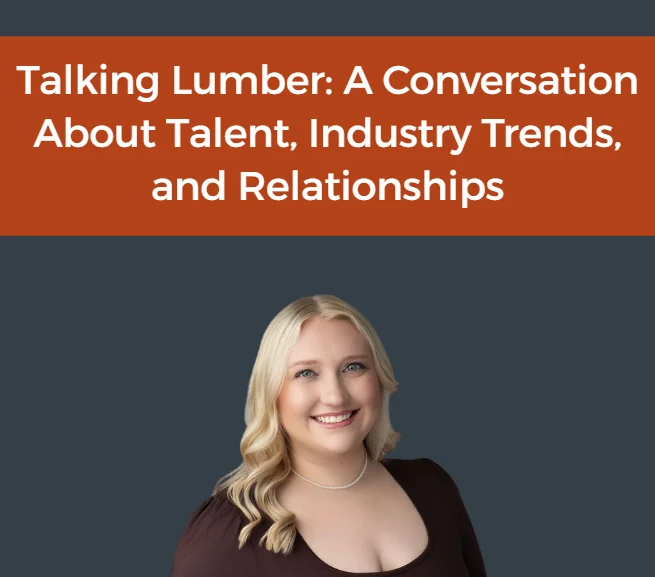
One of the things I enjoy most about working in the lumber industry is that there’s always something new to learn. Whether I’m speaking with a company about its business, connecting with a professional about their career, or attending an industry event, every conversation gives me a different perspective on the people and businesses that make up this industry.
I recently had the opportunity to sit down for an interview following the National Hardwood Lumber Association (NHLA) event, where I shared some of my experiences and perspectives on recruiting within the lumber and building materials industry. We talked about everything from the challenges companies are facing to what professionals are looking for in their careers, but one theme continued to stand out to me: the value of industry knowledge and strong relationships.
I wanted to share a few broader thoughts from those conversations and my experience at the NHLA conference, along with why I believe building relationships remains one of the most valuable things we can do in this industry.
Every Conversation Offers a Different Perspective
One of the biggest advantages of working specifically within the lumber and building materials industry is the opportunity to learn from people with different backgrounds and experiences. No two businesses operate exactly the same way, and the priorities of a lumber yard, sawmill, manufacturer, or distributor can look very different depending on its customers, market, and goals.
That understanding becomes especially valuable when companies are navigating challenges or thinking about their future. A business may be focused on strengthening its operations, developing its sales team, or preparing for growth. Another may be concentrating on efficiency and maintaining strong customer relationships during a slower period. While their priorities may differ, both benefit from having knowledgeable people who understand the business and can contribute to its success.
I think that’s part of what makes recruiting interesting. My job isn’t just to understand the requirements of an open position. It’s to understand the business behind it, the people who work there, and what the company is ultimately trying to accomplish. The more I learn, the better equipped I am to have meaningful conversations with both clients and candidates.
Growing up around a lumber yard gave me an appreciation for how much knowledge people develop through hands-on experience. My dad and grandfather were both involved in the industry, so I was exposed early to the work, responsibilities, and relationships that keep a business running.
This is something I think about often when speaking with companies about what they’re looking for in a candidate. Every position has requirements, and certain qualifications are essential. At the same time, there’s value in understanding how someone’s experience translates to the responsibilities of a role, even if their background doesn’t look exactly like what was originally envisioned.
Having an industry background helps me recognize the significance of those details. I can ask more specific questions, understand the terminology people use, and have conversations that go beyond a job title. It also helps me explain opportunities in a way that connects with someone’s actual experience.
Understanding People Is Just as Important as Understanding the Business
Something I’ve learned from speaking with candidates is that there isn’t one factor that makes an opportunity attractive to everyone. Compensation is important, but it’s only one part of a much larger decision. Some people are focused on career advancement, while others are looking for stability, flexibility, or a better balance between their professional and personal lives.
That’s why I think listening is such an important part of recruiting. Before discussing whether someone might be interested in an opportunity, I want to understand what they value and what would make a change worthwhile. Sometimes that leads to a conversation about a position, and sometimes it simply helps me get to know someone better.
I’ve found that the more information a company shares about its business, expectations, and overall opportunity, the more effectively I can represent it. Details about the team, day-to-day responsibilities, benefits, and long-term direction help create a clearer picture for someone who may not have been considering a career change.
I believe the strongest recruiting conversations happen when both sides have a clear understanding of what matters to the other. That doesn’t mean every conversation will lead to a placement, but it does create a more thoughtful process and helps everyone make better-informed decisions.
One of my favorite parts of attending the NHLA conference was having the opportunity to meet people face-to-face. So much of my work happens over the phone, and while those conversations are valuable, there’s something different about being able to sit down with someone, hear about their business, and get to know them in person.
Those experiences reinforced something I’ve believed for a long time: relationships don’t have to begin with a transaction or an immediate need. In fact, some of the most valuable professional connections develop gradually through conversations, shared experiences, and staying in touch.
I approach candidate relationships in the same way. I enjoy connecting with professionals who are happy in their current roles just as much as those who are actively exploring opportunities. Those conversations give me a chance to learn about their experiences and hear what’s happening across different parts of the industry.
I think this is especially important in an industry where people often build long careers and maintain connections across different companies and markets. Staying in touch, sharing knowledge, and making introductions can all have value, even when there’s no immediate business opportunity involved.
The more time I spend speaking with people across the lumber industry, the more I appreciate how closely industry knowledge and relationship-building work together.
It’s also why I enjoy focusing on one industry rather than approaching every search as an entirely new market. The conversations I have today build on what I’ve learned from previous clients, candidates, and industry events. Over time, those experiences help me develop a stronger understanding of the businesses and professionals I work with.
I also think there’s something valuable about being a resource outside of an active search. Whether someone has a question about the market, wants to discuss their career, or is thinking ahead about a future hiring need, I want them to feel comfortable reaching out.
Continuing the Conversation
What hasn’t changed is the importance of understanding the business, appreciating the experience people bring to the table, and maintaining relationships over time.
As I shared in my interview, it never hurts to have a few more people in your corner. That’s something I believe applies whether you’re a company thinking about future growth or a professional who’s completely happy where you are today.
And whether you’re looking to strengthen your team, explore opportunities, or simply expand your professional network, I’d love to connect.
