
Are Recruiters a “Necessary Evil” in the Business World?
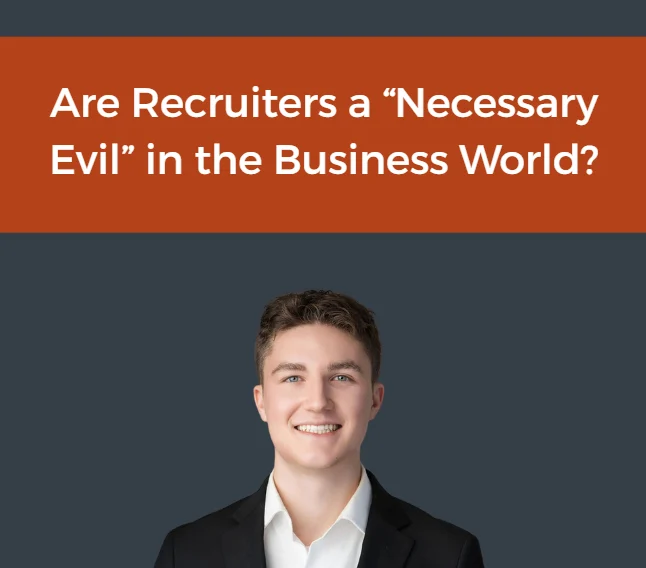
Written by: Brayden Fredrickson
Recently, I reached out to someone about a career opportunity. It was a fairly typical recruiting conversation. The individual mentioned our conversation to their CEO, and before long, I received a not-so-friendly message telling me to stay away from their employees.
Honestly, it didn’t surprise me.
After spending time in the recruiting industry, I’ve realized that recruiters are often viewed as a necessary evil. Companies need us when they’re trying to hire great people, but understandably, they don’t love hearing that someone else is recruiting their own employees.
If you’ve spent years building a strong team, investing in people, and creating a successful business, the last thing you want is another recruiter reaching out to your employees. I completely understand that perspective.
At the same time, I’ve always looked at recruiting through a different lens.
Employees Own Their Careers
Every professional has a career that’s bigger than the company they work for today.
People have families to support, financial goals they want to achieve, and long-term aspirations that change over time. Simply listening to another opportunity doesn’t make someone disloyal. It means they’re gathering information so they can make the best decision for themselves and the people who depend on them.
One conversation with a recruiter doesn’t mean someone is quitting their job. In fact, the overwhelming majority of people I speak with never leave their current employer.
Sometimes the opportunity isn’t better.
Sometimes the timing isn’t right.
Sometimes they realize they’re exactly where they should be.
That’s perfectly okay.
One belief I’ve developed through recruiting is that, at the end of the day, people aren’t really working for money. They’re working for what money allows them to do.
Money buys options. It buys flexibility. It buys experiences. It can reduce stress, create security, and, in many cases, it buys time.
More time with your spouse. More time with your kids. The ability to retire earlier. The freedom to coach your son’s baseball team, take your daughter on vacation, or simply be home for dinner more often.
When I think about career decisions through that lens, it’s hard for me to fault someone for listening to an opportunity that could improve their life. If another role genuinely creates more freedom or gives someone more time with the people they care about most, I think they owe it to themselves to at least hear about it.
That’s also why I’ve always respected the managers who encourage their employees to make the best decision for their future, even when that decision is difficult for the business.
The Best Leaders Think Differently
One of the most interesting parts of recruiting is hearing the conversations candidates have with their current managers.
More than once, I’ve had candidates tell me they discussed an opportunity with their boss before making a decision. Even more surprising, I’ve had managers respond with something along the lines of:
“If they’re offering you that, you should probably take it.”
That’s not because they wanted to lose a great employee.
It’s because they genuinely cared about that person’s future and understood they couldn’t offer the same opportunity internally.
To me, that’s leadership.
The best leaders understand they don’t own someone’s career. They create an environment where talented people want to stay, while also respecting that exceptional opportunities don’t come around every day.
What Recruiters Actually Do
One misconception about recruiting is that our job is convincing people to leave great companies.
That’s never been my approach.
My job is to introduce opportunities, provide information, answer questions, and help both candidates and employers determine whether a move makes sense.
Sometimes it does.
Most of the time, it doesn’t.
Recruiters don’t force career changes. People make those decisions themselves.
A Different Way to Look at Recruiting
I’ve always believed recruiting plays an important role in a healthy job market.
Companies compete for customers every day. Why shouldn’t they compete for talent?
Likewise, professionals should have the freedom to understand what’s available in the market. Hearing about an opportunity doesn’t obligate anyone to make a change. It simply gives them more information to make an informed decision.
At the end of the day, recruiters don’t make people leave great companies.
We start conversations.
And in my experience, the companies that retain great people aren’t the ones trying to prevent those conversations from happening. They’re the ones building cultures, careers, and opportunities that make talented people want to stay.
